introduction: this article is aimed at the network and operation and maintenance teams and introduces how to monitor the real-time health of the servers in station b in taiwan through the monitoring platform. combined with geo optimization ideas, it focuses on availability, latency, packet loss and server-side indicators to help quickly locate and recover, and improve user experience and sla achievement rate.
goals and kpis must be clearly defined before monitoring. indicators that users in taiwan are concerned about include network latency (rtt), packet loss rate, connection success rate, http/tcp response time, cdn hit rate, origin site load, cpu and memory usage, etc. only by associating these kpis with business impacts can reasonable thresholds and alarm levels be set to avoid noise alarms from affecting response efficiency.
real-time monitoring requires the deployment of distributed probes locally or in nearby nodes in taiwan, including active synthetic monitoring (synthetic) and passive traffic collection. the probe should cover major cities and operators, and initiate http, dns, tcp and icmp detection regularly to ensure that the real experience and regional differences of station b services are observed from the user's perspective, and to facilitate performance analysis and route optimization at the geo level.
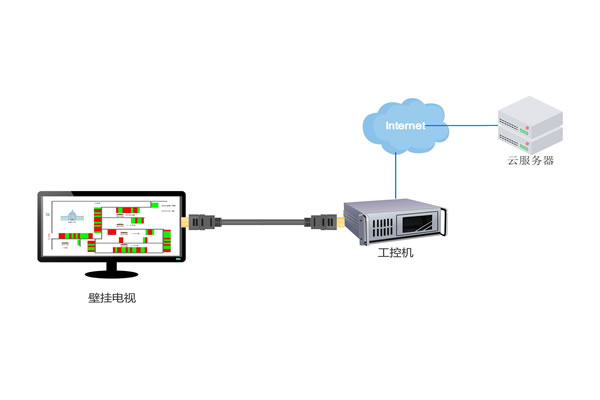
alarm rules should be formulated based on business impact and historical fluctuations, and a combination of short and long windows should be used to reduce false alarms. set three-level alarms of critical/warning/information for key kpis, and link with the on-duty, sre or engineering team to configure multi-channel notifications such as sms, email and automated work orders to ensure that faults in taiwan can be quickly discovered and handled according to priority.
to provide an intuitive view for operations and decision-making, it is necessary to build a real-time dashboard and support a map display of the delay, packet loss, and availability of each node in taiwan. the combination of maps and time series can quickly identify local jitters, operator failures or routing anomalies, and support drilling down to specific instances or logs, helping the team find the scope of the fault and possible causes in a short time.
a single indicator usually cannot locate the root cause. monitoring data should be combined with application logs, distributed tracing, and network traffic playback for analysis. when an exception occurs, different data sources are associated through the timeline to locate cdn, dns, bgp routing, origin site or application layer problems, thereby determining the repair path and forming a review and runbook.
threshold settings need to be based on historical data and take into account seasonality and business peaks. configure automated repair strategies for reoccurring problems, such as restarting services, adjusting traffic distribution, or switching to backup nodes. automation needs to be carefully tested and actions recorded to ensure that when a failure occurs in taiwan, it can reduce manual intervention time and reduce the risk of misoperation.
when deploying monitoring probes and collecting user data in taiwan, you should comply with local regulations and privacy protection requirements, and clarify the data collection scope, retention period, and access rights. operation and maintenance personnel need to be aware of differences in local time zones, languages, and isps to ensure smooth coordination of alarm times and communication channels with the local team.
monitoring is not only used for fault response, but also supports performance optimization and user experience improvement. adjust cdn distribution, dns resolution strategy and edge resource layout based on geo analysis to improve access speed for taiwan users. using monitoring conclusions as a basis for site performance optimization can also improve search engine rankings and user retention in the target area.
summary: establishing a real-time monitoring system for station b in taiwan requires clarifying kpis, deploying local probes, implementing hierarchical alarms, and combining logs and tracking for root cause analysis. it is recommended that from the user perspective, priority should be given to covering latency and availability indicators, in conjunction with automated responses and local compliance strategies, to form a sustainable closed loop of operation and maintenance, and to continuously improve service health and user experience.
- Latest articles
- Beginners Must Read The Advantages And Disadvantages Of Ultra-low-priced VPS In The United States And Real Speed Test Reports
- Cloud Server Vietnam Migration Guide: Steps And Risk Control From Data Synchronization To Traffic Switching
- Comparison Guide: Advantages And Disadvantages Of Japanese Native IP L2TP And Other Protocols
- Avoiding Packet Loss And Disconnection Problems In Stimulating Battlefield Optimization Of Korean And Japanese Servers
- Main Points Of Server Security Protection And DDoS Defense Deployment In Hong Kong And The United States
- What Are The Advantages And Disadvantages Of Hong Kong And Taiwan Servers In Terms Of Latency And Regulations?
- How To Achieve Stable Operation Even If There Is A Cheap Thailand Vps Through Configuration Tailoring
- Why Do E-commerce Websites Prefer High-defense Servers In California, USA, To Protect Against Traffic Impact?
- Technical Guide: How Can Newbies Quickly Test And Go Online With Singapore Cn2 Direct Connection?
- Recommended Vps Cambodia Images And Automated Deployment Templates For Developers
- Popular tags
-

The Use Cases And Best Practices For Using Original IP In Taiwan
Explore the use cases and best practices for using original IP in Taiwan's service, helping you understand how to effectively leverage Taiwan's digital content. -

A Complete Guide On How To Access The World Of Warcraft Taiwan Server, Account Security Settings And Anti-theft Measures
complete analysis of how to access the world of warcraft taiwan server, registration and region selection, as well as account security settings and anti-theft measures. it covers two-step verification, identifying phishing, clients and the handling process after encountering account theft, and provides practical and safe operation suggestions. -

Is The Term "server" In Taiwan? How Can Enterprises Verify The Actual Location Of The Server In The Computer Room When Purchasing?
explain the meaning of "the server is from taiwan", analyze why enterprises need to verify the actual location of the server in the computer room when purchasing, and provide actionable verification methods, compliance and risk tips and procurement suggestions to help enterprises reduce compliance and security risks.